
Staphylokinase shows great potential in stroke treatment, says award-winning scientist Naina Verma
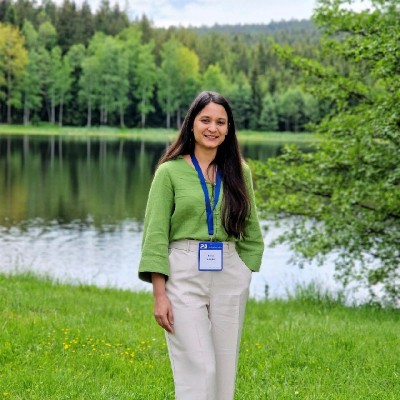
Naina Verma, a Ph.D. student at the ICRC and the Faculty of Science, Masaryk University, focuses on the research and development of proteins for the treatment of blood clots, specifically studying the protein staphylokinase. She specializes in structural biology and protein engineering, as well as in analyzing how changes in a protein affect its function. She therefore contributes to the design of safer and more effective therapeutic variants capable of targeted clot dissolution. In March, Naina Verma received the Best Flash Presentation Award at the 5th International Conference on Hydrogen Deuterium Exchange Mass Spectrometry in Strasbourg, France. She presented her work on HDX-MS analysis of engineered variants of the thrombolytic protein staphylokinase, which has the potential to become a new thrombolytic drug, for example in the treatment of stroke.
Could you please explain to a general reader what staphylokinase is and why it is a frequent subject of research?
Staphylokinase (SAK) is a tiny bacterial protein (136 amino acids) with a giant therapeutic potential, which makes it a frequent subject of research. It is not an enzyme itself; instead, it works as a molecular match‑maker or co-factor. It binds the body’s own inactive enzyme, plasminogen, and hands this complex to fibrin, the protein mesh that makes up a blood clot. Once there, plasminogen is converted into plasmin, the enzyme that chews fibrin apart and dissolves the clot. Because it activates plasmin only at the clot surface, which makes it fibrin specific, SAK looks like an ideal template for a new‑generation clot‑busting drug. Researchers are drawn to SAK because of its potential as a thrombolytic drug, a treatment that can break down clots in conditions such as stroke or heart attack.
In what ways is staphylokinase more promising compared to the currently used thrombolytic agents?
Compared to commonly used thrombolytic agents like Alteplase or Tenecteplase, SAK offers a few important advantages. It is highly fibrin-specific, meaning it acts mainly at the clot site rather than throughout the bloodstream, which may reduce the risk of serious side effects like bleeding. It is also relatively small and cost-effective to produce, which could make it more accessible as a therapeutic option. However, its natural form can trigger an immune response, and overcoming this limitation has become a major focus of current research.
You work on enzyme modifications—how do you modify staphylokinase, and how do you test how the modified staphylokinase behaves? How do you evaluate its effectiveness in the case of stroke?
The actual design of SAK variants is performed by our protein‑engineering colleagues at Loschmidt Laboratories (FNUSA-ICRC and Masaryk University) and CIIRC (Czech Technical University in Prague). They apply rational protein design to reduce immunogenic hotspots, increase solubility, and enhance thrombolytic activity.
My work sits upstream of that: I provide the structural “feedback” that tells the protein engineers whether a given mutation does what we expect at the molecular level. My research is focused on understanding the impact of modifications on the protein structure. I use hydrogen-deuterium exchange mass spectrometry (HDX-MS). This state-of-the-art technology is available at the Masaryk Memorial Cancer Institute, where I use the HDX LEAP robotic station to prepare the samples and use Bruker’s high-resolution timsTOF SCP mass spectrometer for MS analyses. HDX-MS allows us to observe how the protein behaves in solution, how flexible it is, how stable different regions are, and how its structure responds to mutation, where and how it interacts with other proteins. Our HDX-MS analysis generates high-quality experimental data in a near-native state of the protein, to understand its structure better, which can further be used to generate efficient variants.
By combining these structural insights with functional assays, we can begin to understand how specific changes at the molecular level influence the protein’s performance. We begin with laboratory-based assays to test how efficiently protein dissolves fibrin clots, like in-vitro fibrin-clot lysis. From there, we move to more complex systems that better mimic physiological conditions, such as plasma-based experiments and immunogenicity screening, which are performed at the Institute of Biophysics (Academy of Sciences) and Palacky University in Olomouc. We study proteins intensively to understand their structure and thrombolytic properties and produce more efficient variants. These quick read‑outs let us rank the engineered SAKs before moving into animal models, which are carried out by other collaborators.
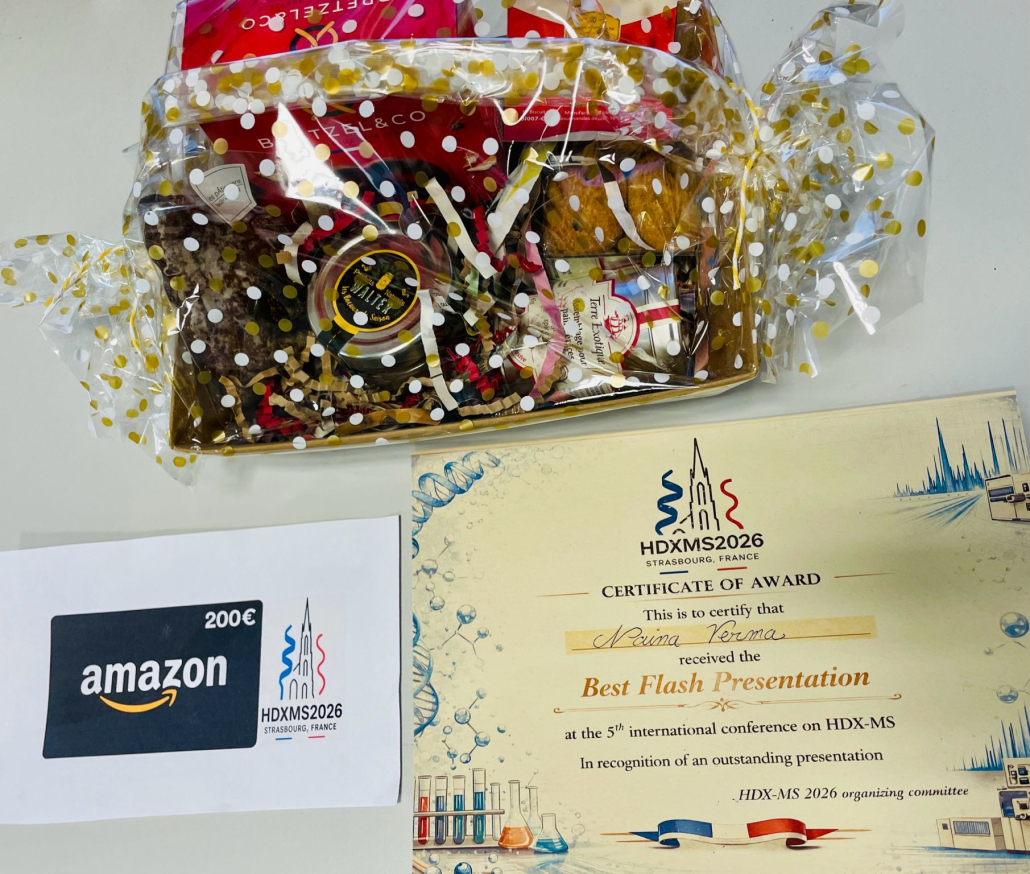
Naina Verma was awarded for Best Flash Presentation
How close do you think we are to staphylokinase becoming a commonly used treatment? What are the key steps in translating modified staphylokinase from research into a clinically used drug?
SAK is a promising candidate, but it is not yet standard clinical treatment in Western countries. The key challenge remains ensuring safety, particularly reducing immunogenicity, while maintaining strong therapeutic performance. However, several clinical studies, spanning more than two decades, have examined recombinant SAK as a clot‑busting drug for stroke. The evidence that has been published so far tells us that SAK is non-inferior to current thrombolytics and appears to cause far fewer bleeding complications.
Bringing a modified protein from the lab to the clinic requires several steps, including optimisation, preclinical testing, and rigorous clinical trials. Our progress is highly encouraging. Our laboratory now has high‑throughput screening platforms, AI‑driven design tools, and a broad interdisciplinary network. With such resources, the distance to go before widespread clinical use has been significantly reduced.
However, currently, we are in the discovery and pre-clinical stage. The next critical milestone is to demonstrate, using robust animal models, that the optimised SAK candidate delivers equal or greater recanalisation than alteplase with a demonstrably lower rate of symptomatic intracerebral haemorrhage. If those data are confirmed, we anticipate Phase‑I trials could commence within the next 2–3 years.
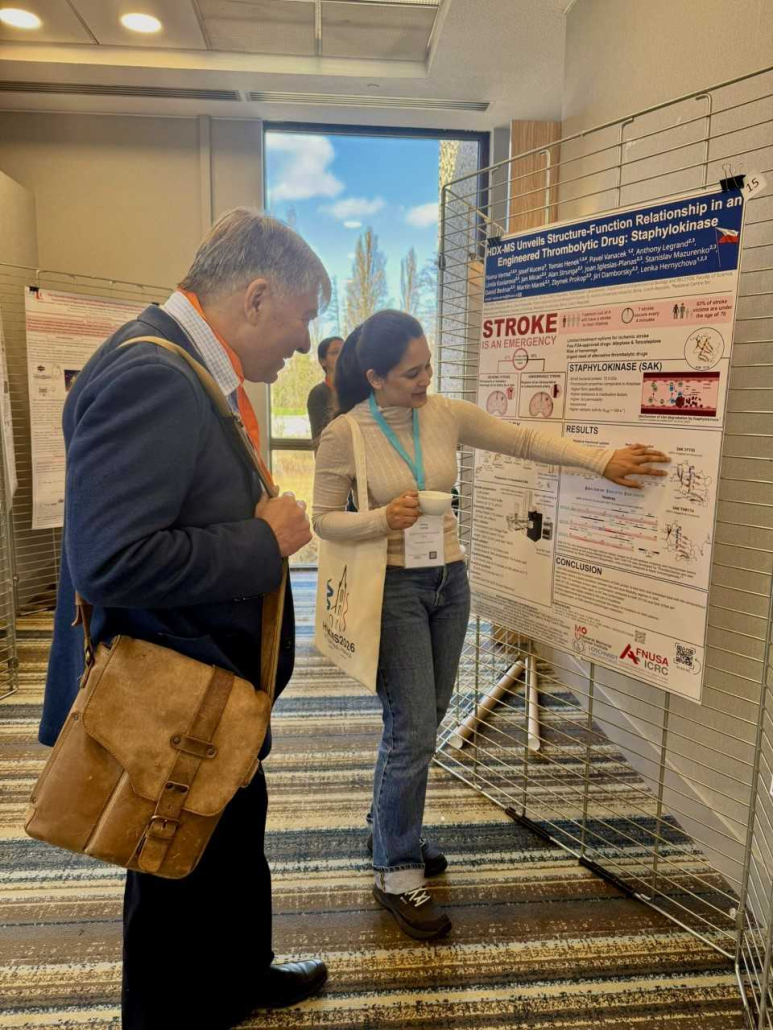
Why do you think your poster (flash talk) stood out among the others to the evaluation committee?
I think it was the combination of clear storytelling and mechanistic insight. Abiding by the format of flask-talk and explaining my research in a short 3-minute presentation was crucial and also challenging. Rather than only describing differences between protein variants, we used HDX-MS to directly link mutations to structural conformational changes and function. All of these elements together gave the committee the impression that the work was both scientifically rigorous and highly relevant.
You have been working at the ICRC, Masaryk Memorial Cancer Institute and Masaryk University for more than two years now. How would you evaluate the research environment there, and how has it influenced your work and scientific development?
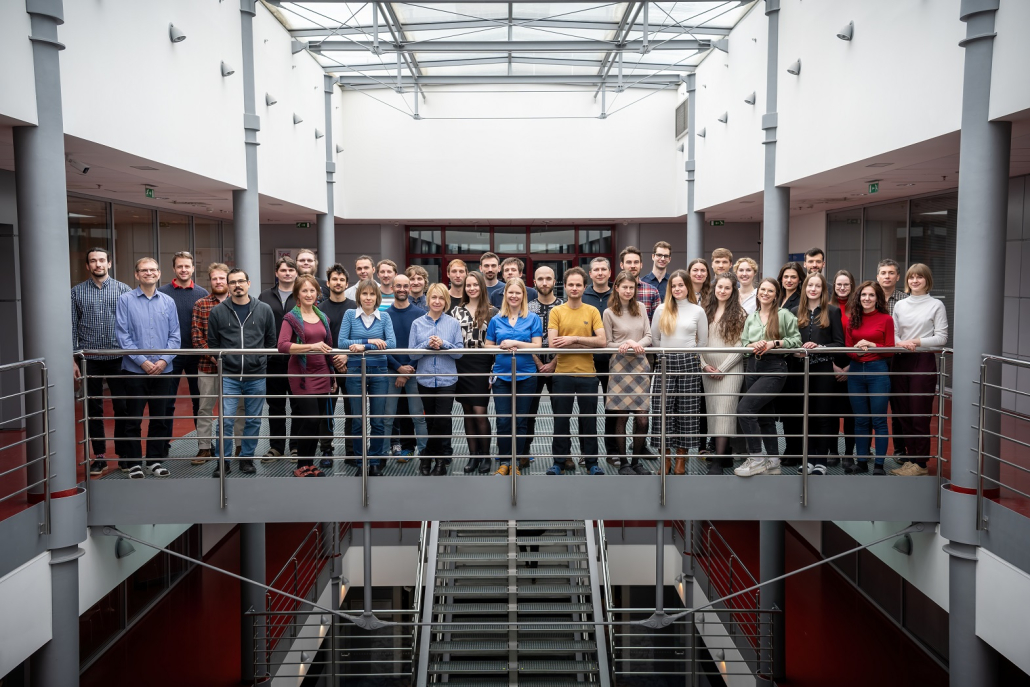
The research environment at the International Clinical Research Centre, Masaryk Memorial Cancer Institute, and Masaryk University is highly collaborative and interdisciplinary. It brings together expertise from structural biology, protein engineering, artificial intelligence, and biomedical science.
Working in this environment has been incredibly valuable. My principal investigator, Prof. Lenka Hernychova, and consultant, Prof. Jiri Damborsky, encourage “failure‑fast” experiments and organise regular discussions. Along with regular group meetings, our colleagues from ICRC and Loschmidt laboratories organise outreach seminars, which provide a great space for exchanging ideas. Overall, the environment has sharpened my technical toolbox (HDX‑MS, data integration) and broadened my perspective by being exposed to different ways of thinking about complex problems.
What do you enjoy most about living and working in Brno?
Brno offers a great balance. It has a strong and growing scientific community, particularly in life sciences, but it also feels very accessible and livable. The rolling Moravian hills and nearby forest trails are perfect for weekend hikes. It’s a city where you can focus on research while still enjoying a good quality of life, which makes it an ideal place to work and grow. The city’s “Mendel vibe” constantly reminds me of the groundbreaking discoveries that took place right beside my workplace. As a Ph.D. student living in Brno, I am very grateful to have a very supportive supervisor and a collaborative research environment that focuses not only on science but also encourages participation in various conferences to communicate research and build more collaborations!
What skills do you think are most important for young scientists today?
Beyond technical expertise, curiosity, critical thinking and clear communication are essential. Modern science is highly interdisciplinary, so the ability to integrate concepts across fields and to convey your findings succinctly is crucial.
Adaptability and creativity are also indispensable, as new technologies and methodologies emerge continuously. With the growing influence of AI, being inventive and deliberate about incorporating these tools into research can markedly amplify its impact.
Where do you see your research heading in the next few years?
Going forward, I’m interested in further exploring how protein engineering influences structural dynamics, particularly using HDX-MS and related techniques, because for therapeutic proteins, the answer lies in their dynamics! I aim to turn structural dynamics into a predictive design language for therapeutic proteins, thereby delivering safer and more effective biologics, and to pass the tools and mindset needed for that work on to the next generation of scientists.
This interview was conducted with the support of the CLARA Center, within which the International Clinical Research Center (ICRC) operates as an integral constituent.
Martina Kopecká
martina.kopecka@fnusa.cz