
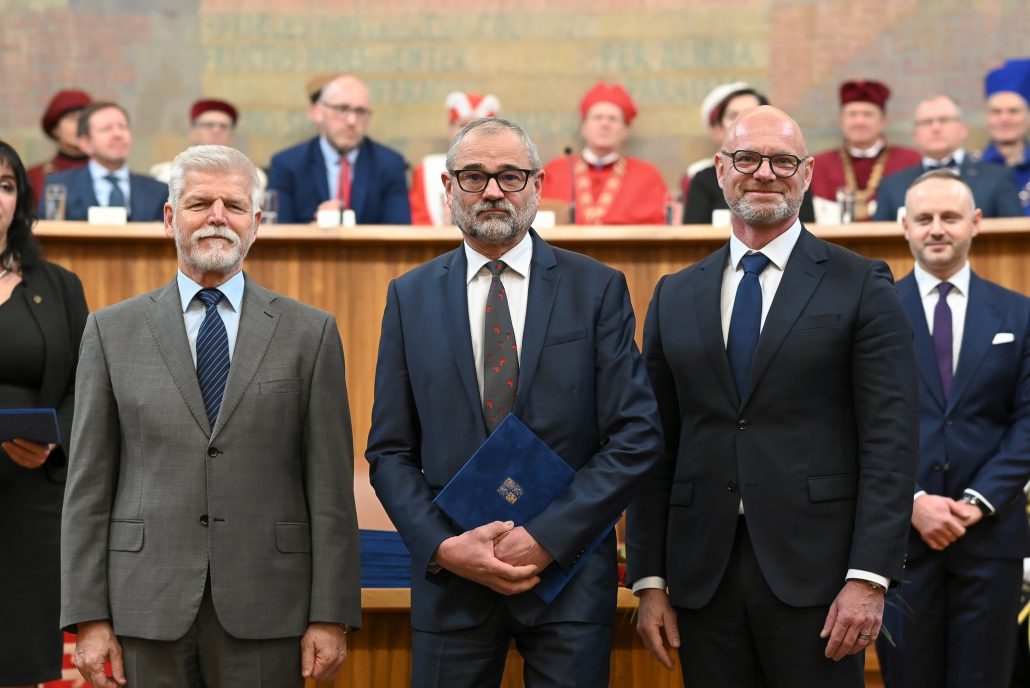
In the Great Hall of the Carolinum, President Petr Pavel, in the presence of the Minister of Education, Youth and Sports, Robert Plaga, presented 69 letters of appointment to newly appointed professors who had been approved on the basis of nominations by the scientific and artistic councils of universities. One of those appointed was Aleš Hampl, Head of the ICRC Cell and Tissue Regeneration team. Six months earlier, at the same venue, the letter of appointment had been received by Lukáš Kubala, Head of the ICRC Molecular Control of Immune Response team.
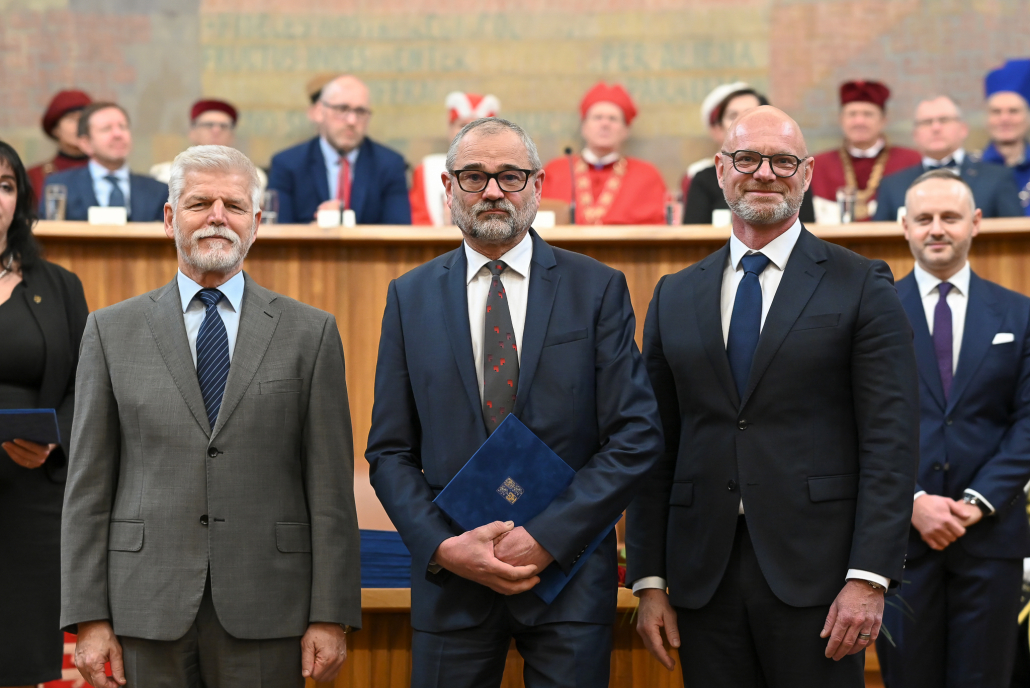
Photo: MŠMT
On Tuesday, 16 December, Aleš Hampl received his letter of appointment from President Petr Pavel, in the presence of the Minister of Education, Youth and Sports, Robert Plaga. He was appointed Professor on the basis of a proposal by the Scientific Council of Masaryk University in the field of Anatomy, Histology and Embryology at the Faculty of Medicine, Masaryk University.
Professor Hampl leads the Cell and Tissue Regeneration team at ICRC and focuses on the properties of various types of stem cells with regard to their application in biomedicine, specifically investigating their genetic and genomic stability. The main goal of his research is to understand and precisely modulate the biological properties of different types of human pluripotent stem cells—namely tissue-derived, induced, and embryonic stem cells—with the aim of their safe application in biomedicine.
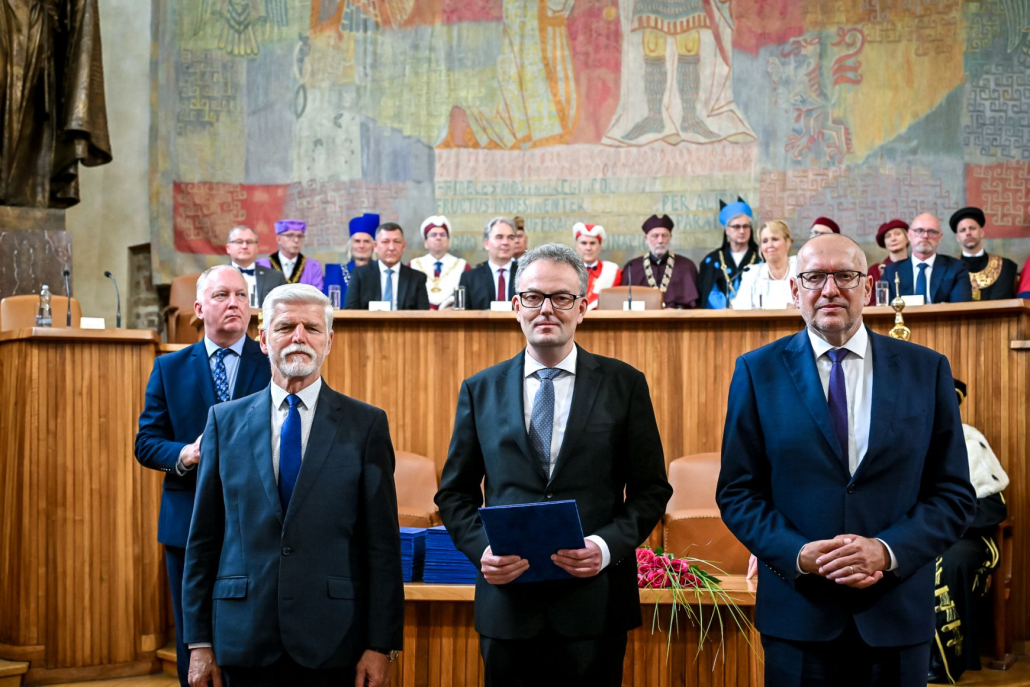
Exactly six months earlier, the President of the Czech Republic appointed Lukáš Kubala, Head of the ICRC Molecular Control of Immune Response team, as Professor. Professor Kubala also holds positions at the Department of Animal Physiology and Immunology of the Faculty of Science, Masaryk University, and at the Institute of Biophysics of the Czech Academy of Sciences.
In his research, Professor Kubala focuses on elucidating the molecular mechanisms of acute and chronic inflammatory processes and on identifying new therapeutic approaches. He studies the role of hyaluronan in wound healing and inflammation and its potential applications in drug development. He also investigates microfluidic systems colonized by endothelial cells that mimic microvascular systems. The aim is to develop fluidic models to study the relationship between blood flow and vascular inflammation, as well as vessel recanalization during ischemic stroke.