
Translational Neurodegeneration Lab
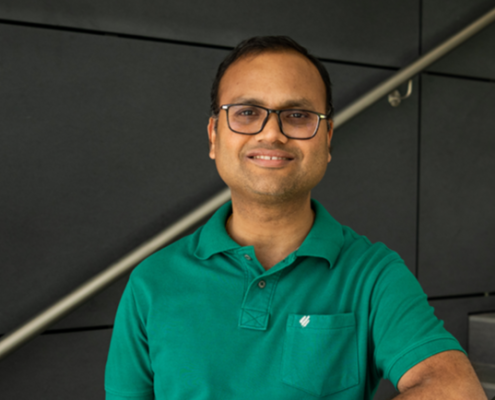
Dr. Amit Khairnar leads cutting-edge research on Parkinson’s disease (PD) and aging at the International Clinical Research Center (ICRC), Masaryk University (MUNI), where he heads the Translational Neurodegeneration Lab. He also teaches in the Department of Physiology at MUNI. His team pioneered diffusion kurtosis imaging (DKI) as a sensitive MRI biomarker for detecting α-synuclein-induced microstructural changes in transgenic α-synuclein-overexpressing mice and progressive rotenone models, tracking pathology time-dependently. The lab develops “brain-first” and “body-first” PD mouse models, with recent focus on senescent astrocytes’ role in PD progression. As a Czech National Institute for Neurological Research (NINR) member, Dr. Khairnar collaborates internationally with Prof. Tiago Fleming Outeiro (Göttingen, Germany), Prof. Cristina Cocco (Cagliari, Italy), Dr. Martin Marek and Prof. Jiri Damborsky (Brno, CZ), Prof. Nigel H. Greig (NIH, USA), Dr. Viswanath Das (Olomouc, CZ), and Elliott James Price (Brno, CZ).
Decoding The Hidden Biology of Parkinson’s Disease
Research Focus
The Translational Neurodegeneration Lab investigates core pathways in Parkinson’s disease (PD), integrating cellular mechanisms, aging, and therapeutic strategies to bridge preclinical models and clinical translation.
- α-Synuclein Pathology: Elucidating aggregation mechanisms (~100-2000 kDa oligomers/fibrils) and propagation via brain-first/body-first models, including intranasal delivery systems.
- Glial Senescence: Role of senescent astrocytes (e.g., PAI-1/p53/p21 upregulation) in driving α-synuclein accumulation, neuroinflammation, and dopaminergic neuron loss.
- Neuroimaging Biomarkers: Pioneering diffusion kurtosis imaging (DKI) and magnetic resonance spectroscopy (MRS) to detect microstructural changes in progressive PD mouse models.
- Therapeutic Screening: Testing natural compounds, chemically synthesized compounds and short peptides against α-synuclein aggregation as neuroprotective agents.
- Magnesium/TRPM7 Signaling: Mechanisms linking Mg²⁺ deficiency, TRPM7 channels, and MMP-3/MMP-14 activation to α-synuclein pathology.
- Gut Microbiome Dysbiosis: Mechanisms of PD-enriched pathological bacteria (Desulfovibriaceae) driving α-synuclein oligomerization and dopaminergic neuron degeneration along the gut-brain axis.
Main Objectives
The Translational Neurodegeneration Lab pursues targeted objectives to dissect PD mechanisms and advance therapeutics:
- Characterize Astroglial Senescence: Elucidate how senescent astrocytes and aging processes (e.g., PAI-1/p53/p21 upregulation) drive α-synuclein accumulation (~100-2000 kDa oligomers), neuroinflammation, and dopaminergic neuron loss in PD models.
- Evaluate Neuroprotective Compounds: Assess taurine derivatives, RAGE inhibitors, and VGF peptides for mitigating neurodegeneration and restoring proteostasis in preclinical systems.
- Test Microbiome Interventions: Investigate fecal microbiota transplantation (FMT) from healthy young donors to alleviate gut dysbiosis-induced neuroinflammation, glial senescence, and PD pathology via gut-brain axis modulation.
- Develop and evaluate Anti-Aggregation Therapies: Test peptide inhibitors targeting α-synuclein seed-induced aggregation for synucleinopathy treatment across PD models.
- Unravel Mg²⁺/TRPM7 Pathways: Define magnesium deficiency’s role in promoting α-synuclein pathology through TRPM7 channel activation of MMP-3/MMP-14, and its contribution to dopaminergic neurodegeneration.
Technological equipment
- Confocal microscope with increased resolution
- Real-time PCR system,
- Electrophoretic equipment (Western Blot and DNA gel electrophoresis),
- Animal house facility with advanced behavioural instruments for detecting motor and memory impairment
- MR Imaging facility for structural and functional imaging
- Nanoparticle tracking analysis and Quantitative Phase microscopy.
Členové týmu
- MUDr. Lenka Krajčovičová, Ph.D.
- Mgr. Sheetal Maria
- Mgr. Ajay Modi
- MUDr. Richard Pavčík
- Barbora Poulíková
- doc. PharmDr. Jana Rudá, Ph.D.
Asistentka
Romana Vlčková