,

“The ICRC Academy reassured me that staying in research is meaningful — at a time when I had almost given up on it,” says Sára Hovanová

ICRC Academy intern Sára Hovanová comes from Košice in eastern Slovakia and is currently studying Neuroscience at Masaryk University. According to Sára, the newly established study programme at the Faculty of Medicine provides a unique opportunity to get closer to clinical research. Her interest in science began in childhood, driven by curiosity and a fascination with documentaries about space, history, and biology. Over time, she became particularly intrigued by the complexity and functioning of the human brain. After attending the ICRC Academy Weekend Seminar in November 2025, Sára joined the Neuromodulation Technology team, where she is involved in clinical research and patient-oriented work under the supervision of her mentor, Ph.D. student Ing. Jan Trajlínek.
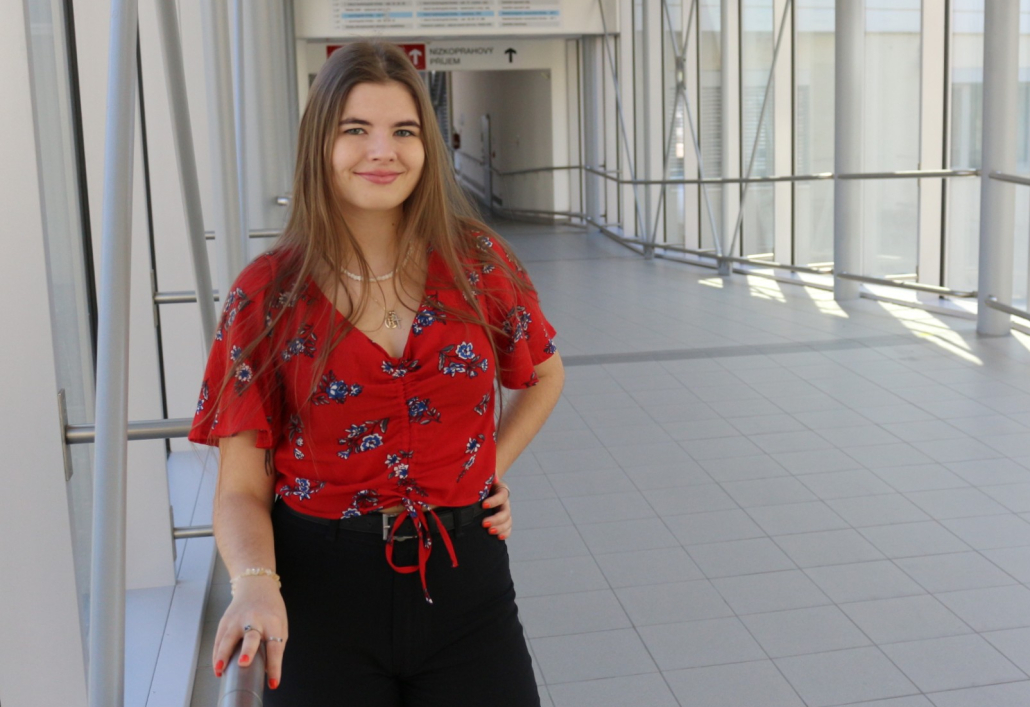
Sára Hovanová
What led you to the field you are currently pursuing, namely neuroscience?

When choosing a university, I was looking for “something” that would combine natural sciences, psychology, and medicine. Unfortunately, I was not able to find such a programme at the time, so I continued exploring these subjects mainly through popular science literature in my free time. Neuroscience represents the ideal intersection of these fields for me. I am fascinated by the search for the biological essence of who we are and by the many factors that shape it.

Do you remember the moment when you first became interested in science?

My interest in science was sparked by my father and grandfather, as I grew up surrounded by documentaries about space, history, and biology. Although I do not come from a family of scientists, they inspired in me a deep curiosity about how the human body works, especially the brain.

It was not one specific moment, but rather a gradual process of observing the world around me. I began noticing that different people react to the same situations in completely different ways. I was fascinated by this uniqueness and started searching for answers to what lies behind it from the perspective of brain biology.


What does a typical day during your internship look like? What exactly are you involved in?

Every day is different. I started by learning data analysis using software such as Noxturnal, AnyWave, Python, and SignalPlant. Gradually, I also became involved in experiments at CEITEC, where, in addition to temporal interference stimulation, we work with imaging techniques, including magnetic resonance imaging (MRI).

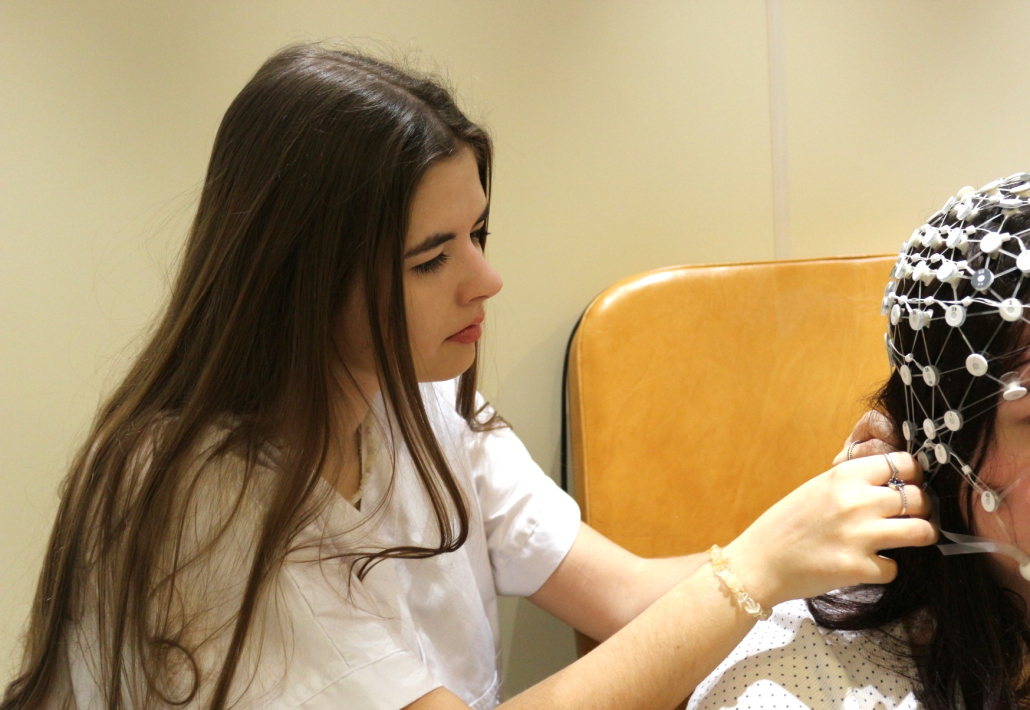
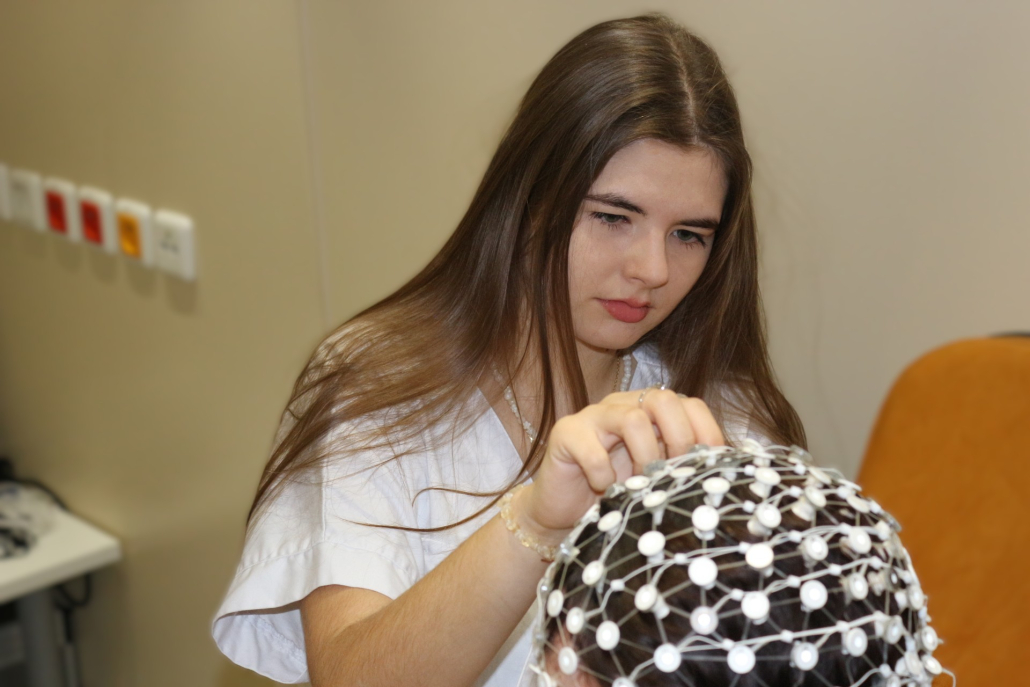
At the moment, I am also participating in a project focused on improving sleep quality and reducing epileptic brain activity through non-invasive stimulation in patients with epilepsy. I assist with the preparation of both the technical equipment and the patients themselves — from the correct placement of electrodes on the head to monitoring the entire measurement process.

Do you see your future more in research, clinical practice, or somewhere “in between”?

I am very drawn to clinical research, whether in the field of epilepsy or in other areas such as Parkinson’s disease, autism, or borderline personality disorder.

Has your experience within the ICRC Academy influenced your future plans?

Definitely. It reassured me that staying in research is meaningful — especially at a time when I had almost given up on it and was ready to “close the door” on that path entirely. This internship renewed my motivation to explore and discover again.

Would you be interested in staying at ICRC after your internship?

If I had the opportunity, I would definitely accept it. The community at ICRC is truly exceptional, and the scientific teams here operate at a world-class level. What impressed me the most, however, are the people I have met here. It is clear that they put their hearts into their research. For many of them, it is not just an everyday job routine, but a genuine mission.

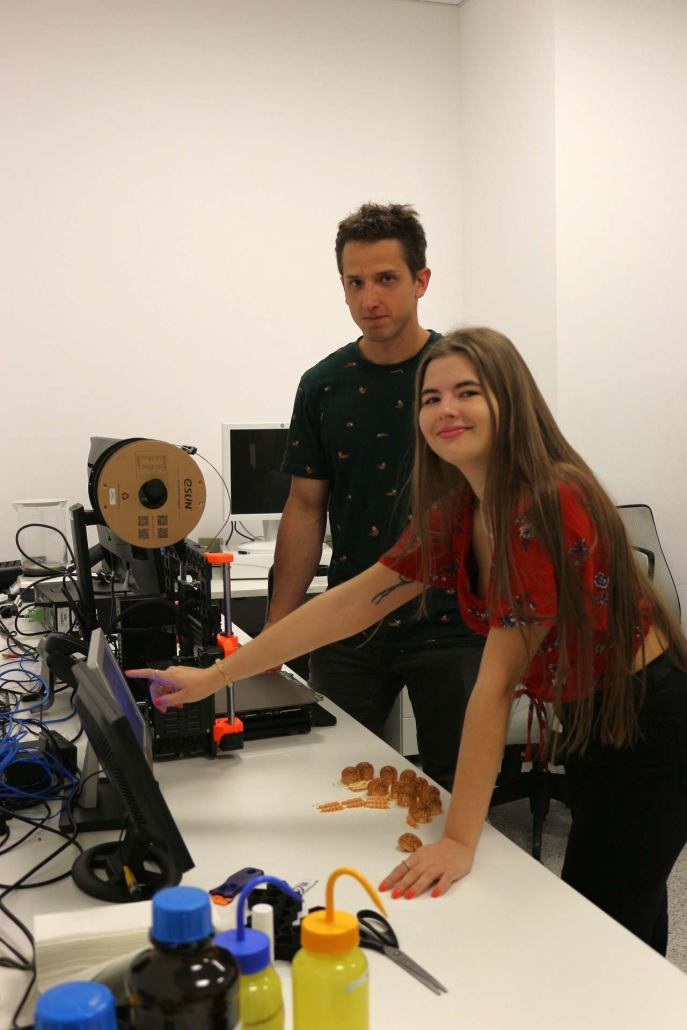
Sára and her supervisor, Jan Trajlínek

What would you say to people who are considering applying to the ICRC Academy?

I would encourage them not to hesitate and simply apply. It is a unique opportunity to gain insight into clinical research that students would not normally have access to.

The ICRC Academy opens the door to new knowledge, valuable connections, and perhaps, just as it did for me, it may help you discover the direction you truly want to pursue. At the same time, it allows you to smoothly transition from theory to real-world research through an internship experience. You certainly will not regret it. After all, if not now, when is the best time to try new things?

Author: Kristýna Baštová