
From HR Policies to Daily Practice: What Actually Changed in Central and Eastern European Research Institutions?
Over the past decade, research institutions in Central and Eastern Europe (CEE) have invested significant effort in reforming their human resource management. New recruitment rules, leadership programmes, and gender equality plans are now commonplace. But have these changes altered everyday practice in laboratories, departments, and research groups?
A recent analysis by Alliance4Life provides one of the most detailed answers so far. The study combines a large-scale employee survey (681 respondents) with structured interviews and questionnaires from leadership and HR representatives across 12 research institutions in the region. Rather than assessing policies on paper, it examines how HR reforms are experienced by researchers, managers, and staff.
The results are sobering, but constructive. While institutional frameworks have clearly improved, their translation into daily practice remains uneven.
Recruitment: More Structure, Uneven Experience
Recruitment is the area where institutions and employees most often agree that things have improved. Open calls, standardised procedures, and HR involvement—often introduced under the HR Excellence in Research framework—are now the norm rather than the exception.
Institutional representatives consistently point to clearer rules and increased transparency. Employees largely confirm this trend, particularly those who recently participated in recruitment committees.
Yet the data also expose a persistent weak point: the preparedness of hiring managers.
“The process is transparent on paper,” one respondent commented, “but much depends on who leads it.”
Onboarding is another recurring issue. While many institutions report having onboarding procedures, employees frequently describe the experience as inconsistent or symbolic.
Practical takeaway for leadership:
Standardisation alone is not enough. Institutions that invest in systematic training for hiring managers and clearly defined onboarding responsibilities report fewer negative experiences and higher trust in recruitment outcomes.
ender Equality and Diversity: Policies in Place, Impact Less Visible
All participating institutions now have formal gender equality or equal treatment frameworks. From the leadership perspective, this represents a major shift compared to a decade ago.
Employees, however, describe a more fragmented picture.
Awareness of gender equality initiatives is uneven, especially among early-career researchers and international staff. While flexible working arrangements and parental leave support are widely appreciated, many respondents question whether diversity policies influence career progression or leadership appointments.
Institutions are also candid about their limitations. Most collect data only on gender, with little systematic monitoring of nationality, caregiving responsibilities, or disability.
Practical takeaway for leadership:
The challenge has shifted from introducing equality measures to making their effects visible and measurable. Institutions that integrate GEDI considerations into recruitment, evaluation, and leadership assessment report higher credibility among staff.
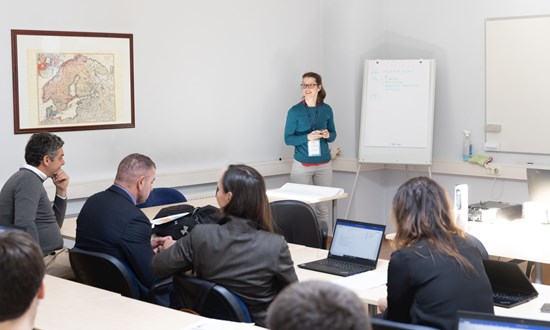
Focus Group HR and Mobility Meeting, Tartu, 2022 (Photo credit: Andres Tennus)
Leadership: The Largest Gap Between Strategy and Experience
Leadership development has become a strategic priority across Alliance4Life institutions. Training programmes, coaching, and peer-learning formats are expanding, with particularly structured approaches reported at institutions such as CEITEC Masaryk University and University of Tartu.
From the employee perspective, however, leadership quality is judged almost entirely on daily behaviour.
“You don’t feel leadership in training certificates. You feel it in feedback, communication, and whether your supervisor has time for you,” one survey response stated.
Employees frequently mention inconsistent leadership quality between teams, lack of feedback and accountability mechanisms, and the absence of consequences for poor leadership.
Some go further, calling for mandatory leadership training or regular evaluation of supervisors.
Interestingly, institutions that have introduced leadership interviews, coaching, or links between leadership behaviour and evaluation report early positive effects—but also acknowledge that such measures are still experimental and resource-intensive.
Practical takeaway for leadership:
Leadership training without follow-up, evaluation, and institutional anchoring has limited impact. The data suggest that leadership must be treated as a core professional competence, not an optional add-on.
The “Last Mile” Problem
Across all three areas—recruitment, gender equality, and leadership—the study identifies the same structural tension: a gap between institutional intent and everyday experience. Policies exist. Tools exist. But their effects often weaken at the level of departments and research groups.
The findings suggest that the main challenge lies not in strategic intent, but in the capacity to implement policies consistently in everyday practice.
As one institutional representative put it during interviews:
“We know what should be done. The challenge is ensuring it actually happens consistently, beyond pilot projects and individual enthusiasm.”
“Our findings show that the main challenge today is no longer the absence of HR policies, but their consistent implementation in everyday practice. The gap emerges at the level of teams and direct line management.”
Eliška Handlířová, author of the study
Why This Matters for CEE Institutions
The findings carry a clear message for research leadership in Central and Eastern Europe. Structural HR reforms are no longer the main bottleneck. The critical issues now lie in consistency across organisational levels, managerial capability and accountability, and the ability to translate formal frameworks into daily practice.
Institutions that address these areas are better positioned to retain talent, reduce internal friction, and compete internationally—not through slogans, but through credible working conditions.
Alliance4Life in Context
This analysis is part of a broader effort by Alliance4Life, a consortium of leading research institutions in Central and Eastern Europe working to strengthen excellence, sustainability, and governance in the region.
Following earlier Alliance4Life studies focused on HR structures and policy development, this report deliberately shifts attention to experience. Its value lies precisely in grounding leadership discussions in evidence from employees and team leaders – those who experience HR reforms first-hand in their daily work.
The full study is available here (p. 25-124):
https://alliance4life.com/media/3920924/a4l_bridge_d11-research-culture-assessments_101136453docx.pdf
Eliška Handlířová